
Solar Panel Installation Cost for Home in India: Complete Pricing Guide
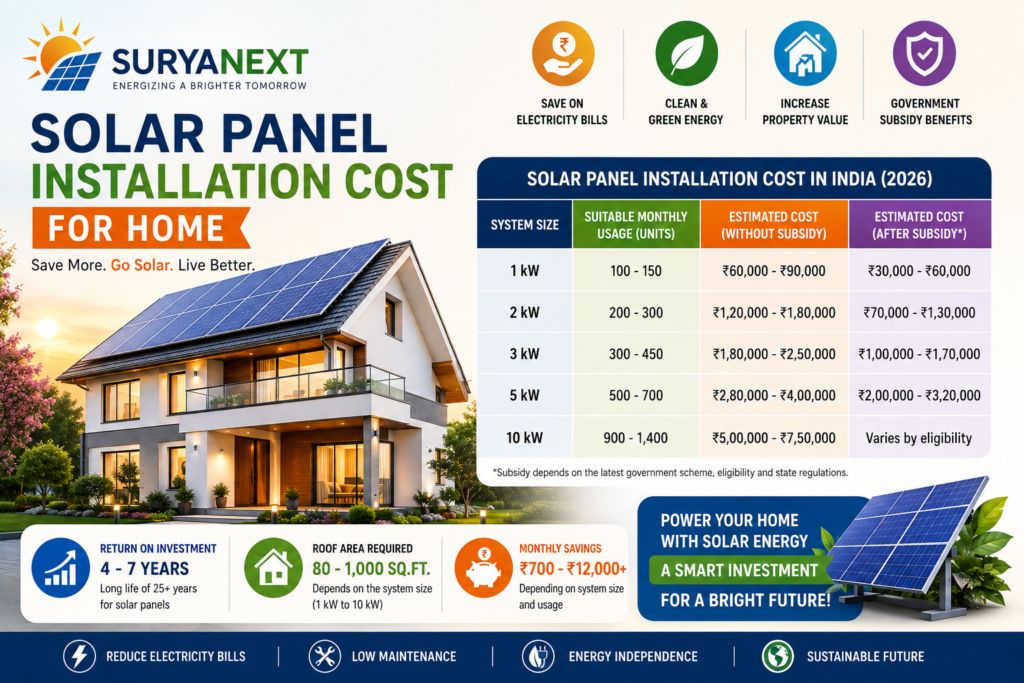
Solar Panel Installation Cost
As electricity prices continue to rise across India, more homeowners are choosing rooftop solar systems to reduce monthly bills and become less dependent on the grid. One of the first questions most homeowners ask is, "How much does solar panel installation cost for a home?"
The answer depends on several factors, including your home's electricity consumption, the size of the solar system, the type of panels you choose, installation complexity, and the government subsidy available.
This guide explains everything you need to know about home solar installation costs in India, helping you make an informed decision before investing.
Average Solar Panel Installation Cost in India
The average cost of installing a residential solar system typically ranges between ₹55,000 and ₹85,000 per kW before subsidies. The final price depends on equipment quality, inverter type, mounting structure, and installation requirements.
Solar System Size
Suitable For
Estimated Cost (Before Subsidy)
1 kW
Small homes
₹55,000–₹80,000
2 kW
1–2 BHK homes
₹1.10–₹1.60 lakh
3 kW
Medium homes
₹1.65–₹2.40 lakh
5 kW
Large homes
₹2.75–₹4.25 lakh
10 kW
Villas & Large homes
₹5.50–₹8.50 lakh
Note: Prices vary by location, brand, roof type, and installer.
What Is Included in the Installation Cost?
A professional solar installation generally includes:
1 Solar panels
2 Solar inverter
3 Mounting structure
4 DC and AC wiring
5 Safety devices
6 Earthing system
7 Installation labour
8 System testing and commissioning
9 Documentation and basic support
Some installers also assist with net metering and subsidy-related paperwork.
Factors That Affect Solar Panel Installation Cost
1. System Size
Larger systems generate more electricity but require additional panels, inverters, and mounting materials.
2. Solar Panel Technology
High-efficiency panels generally cost more but can produce more electricity from the same roof area.
3. Roof Type
Installation costs may vary depending on whether the roof is RCC, metal sheet, or tiled. Accessibility and structural requirements also influence labour costs.
4. Inverter Type
Common options include:
1 On-grid inverter
2 Hybrid inverter
3 Off-grid inverter
The right choice depends on whether you want battery backup and your local electricity supply conditions.
5. Installation Location
Labour charges, transportation, and local regulations may differ between cities and rural areas.
How Much Can You Save on Electricity Bills?
A properly sized rooftop solar system can significantly reduce monthly electricity expenses.Approximate annual energy generation:
1 kW: 1,300–1,500 units
3 kW: 3,900–4,500 units
5 kW: 6,500–7,500 units
Actual generation depends on location, weather, panel orientation, and maintenance.
Is Solar Worth the Investment?
For many households, rooftop solar provides long-term value because it can:
1 Lower monthly electricity bills
2 Protect against future tariff increases
3 Increase energy independence
4 Reduce carbon emissions
5 Add value to residential property
While the upfront investment can seem significant, the savings accumulated over the system's lifetime often outweigh the initial cost.
Tips to Reduce Installation Costs
Frequently Asked Questions
How much does a home solar system cost in India?
Most residential systems cost between ₹55,000 and ₹85,000 per kW before applicable subsidies, depending on equipment and installation requirements.
Which system size is best for a home?
The ideal size depends on your monthly electricity consumption, available roof space, and future energy needs.
How long does installation take?
Most residential rooftop systems are installed within one to three week, although approvals and utility processes may take longer.
How long do solar panels last?
Quality solar panels typically have a service life of 25 years or more, with performance warranties offered by many manufacturers.
Can solar panels work during cloudy weather?
Yes. They continue generating electricity on cloudy days, although output is generally lower than on bright, sunny days.